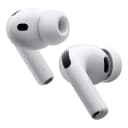
Apple
AirPods Pro 3 with Hearing Aid Feature
FDA-cleared OTC hearing aid software
The honest answer to "is it bad enough?" is usually: if it's affecting your daily life, it's bad enough to act — and you don't have to wait for severe loss. Here's how the severity bands work, what mild and moderate actually feel like, and how to tell whether you're in the range over-the-counter hearing aids are built for.
Want a number, not a guess? The severity quiz estimates your band from everyday situations, and the audiogram interpreter reads it straight off a hearing test.
Hearing loss is graded in decibels hearing level (dB HL) — how loud a sound has to be before you can just hear it. The two mildest bands, mild (26-40 dB HL) and moderate (41-55 dB HL), are exactly the range the FDA created over-the-counter hearing aids for. So if your loss is in that range, it is both "bad enough" to benefit from hearing aids and mild enough that you can buy one without a prescription. Loss worse than moderate (56 dB HL and up) generally needs a hearing professional.
You do not need to wait for things to get worse. Amplification doesn't bring back lost hair cells, and years of straining make the eventual adjustment harder — so the mild-to-moderate stage is the easier, cheaper place to start.
Audiologists use five bands. OTC devices cover the first two; the rest need professional fitting.
| Severity | Range (dB HL) | What it feels like | OTC? |
|---|---|---|---|
| Mild | 26–40 | Miss soft speech; struggle in noise; fine one-on-one in quiet | Yes |
| Moderate | 41–55 | Normal conversation is hard without help; TV too loud for others | Yes |
| Moderately severe | 56–70 | Hard to follow speech even up close without aids | No — see a pro |
| Severe | 71–90 | Only very loud speech is audible | No — see a pro |
| Profound | 91+ | Rely on lip-reading; may consider cochlear implants | No — see a pro |
Bands per NIDCD classification. "Perceived" mild-to-moderate is the OTC standard — a formal audiogram is the precise measure.
You rarely notice a decibel number — you notice situations. The common early signs:
If those describe quiet-room conversation too — you miss words one-on-one in silence — your loss may already be past moderate, and a professional evaluation is the right next step. And regardless of band, see a doctor first if your loss came on suddenly, affects one ear only, or comes with dizziness, pain, or drainage.
You can get a free, reasonable estimate before spending anything:
In range? Browse the mild-loss and moderate-losspicks. One thing to check before buying: many products sold as "OTC hearing aids" aren't FDA-cleared as hearing aids at all — see PSAP vs hearing aid.
Three FDA-cleared OTC options for perceived mild-to-moderate loss, in ascending price order. Same picks we recommend site-wide; severity fit verified against each product's cleared range.
Apple
At $199-$249 with FDA-cleared hearing aid software (DEN230081), the AirPods Pro 3 turn an iPhone you may already own into a legitimate mild-to-moderate hearing aid. Lowest-risk way to start.
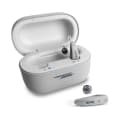
Lexie
Bose-tuned, rechargeable, self-fitting via the Lexie app, with a 45-day trial. $899 — a fraction of the audiologist price for the same mild-to-moderate range.
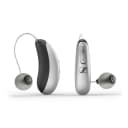
Sennheiser
Built by Sonova (the company behind Phonak), the All-Day Clear is a true QUH self-fit hearing aid with Bluetooth streaming and a 2-year warranty — around $949 street.
Picks are based on FDA regulatory pathway, price, and severity fit from our verified product database — not on which brand pays the most.
You don't need to reach severe loss to benefit. If you regularly turn the TV up past what others want, ask people to repeat themselves, or lose the thread of conversation in restaurants, that's typically mild-to-moderate loss — and it's worth addressing. Hearing aids are most effective when started earlier rather than after years of straining. The over-the-counter category exists specifically for perceived mild-to-moderate loss, so for most people in that range the answer is yes, and you can start without a prescription.
They're defined by how loud sounds must be before you hear them, measured in decibels hearing level (dB HL). Mild loss is about 26-40 dB HL: you follow normal conversation but miss soft speech and struggle in noise. Moderate loss is about 41-55 dB HL: normal-volume conversation is genuinely difficult without help, even one-on-one in a quiet room. Both fall inside the OTC range; anything worse than moderate (56 dB HL and up) is generally beyond what OTC devices are cleared to handle.
Mild loss tends to show up as missing soft consonants, asking 'what?' in groups, and trouble hearing in restaurants or over background noise, while one-on-one in quiet is usually fine. Moderate loss is more constant: you need the TV noticeably louder than others, phone calls are hard, you miss parts of conversations even in quiet, and people feel like they're mumbling. If you can't follow a one-on-one conversation in a quiet room at normal volume, your loss may already exceed moderate.
Usually yes. OTC hearing aids are FDA-cleared for perceived mild-to-moderate loss, and moderate loss (41-55 dB HL) sits at the upper edge of that range. Many well-reviewed OTC self-fitting aids handle it well. If your loss is at the very top of moderate or you want professional fitting and follow-up, a prescription device may serve you better — the OTC vs audiologist decision tool weighs your loss, budget, and support needs.
Generally no. Waiting doesn't restore lost hearing, and longer untreated loss can make the eventual adjustment to amplification harder. Acting in the mild-to-moderate stage is the easier, lower-cost path, and OTC devices make it possible to start without a clinic visit. The exceptions that do warrant a doctor first: hearing loss that came on suddenly, sits in only one ear, or comes with dizziness, pain, or drainage.