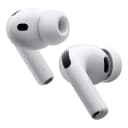
Apple
AirPods Pro 3 with Hearing Aid Feature
FDA-cleared OTC hearing aid software
A 2022 FDA rule created a whole new way to buy hearing aids — off the shelf, no appointment. But the over-the-counter category has firm limits on who it's for. Here's the honest line between what you can self-fit and what still needs a professional.
Not sure which side of the line you're on? The OTC vs Audiologist decision tool and the hearing-loss severity quiz give you a free starting answer in under two minutes.
Since October 17, 2022, adults 18 and older who perceive mild-to-moderate hearing loss can buy FDA-regulated hearing aids over the counter — in pharmacies, big-box stores, and online — with no prescription, medical exam, or professional fitting required. Anyone with more-than-moderate loss, hearing loss in children, or warning signs of a medical problem still needs a licensed hearing professional and, in most cases, a prescription device.
Both OTC and prescription hearing aids are real, FDA-regulated medical devices. The difference is not quality tier — it's who fits them, how severe a loss they're allowed to serve, and how you pay for them.
For decades, every hearing aid in the United States legally required a visit to an audiologist or hearing-instrument specialist. In August 2022 the FDA finalized a new device category — over-the-counter hearing aids — that Congress had directed it to create in 2017. The rule took effect October 17, 2022, and is codified primarily in 21 CFR 800.30.
The rule did three things: it defined OTC hearing aids as devices for adults with perceived mild-to-moderate hearing loss, it set output and design limits so the devices stay within that range, and it let manufacturers sell them directly to consumers for self-fitting. It did not eliminate prescription hearing aids — it carved out a lower-stakes slice of the market that no longer needs a gatekeeper.
OTC devices are designed for two of the five clinical hearing-loss bands:
They are notintended for moderately-severe, severe, or profound loss (56 dB HL and up), and they are not for anyone under 18. If you can't follow a one-on-one conversation in a quiet room, your loss likely exceeds what an OTC device is built to handle, and pushing an OTC aid past its range tends to produce distortion rather than clarity.
When you weigh OTC against prescription, four things actually differ:
| OTC hearing aids | Prescription hearing aids | |
|---|---|---|
| Who it's for | Adults 18+, perceived mild-to-moderate loss | Any age, any degree of loss including severe/profound |
| Fitting | Self-fit via app or preset programs | Measured and programmed by a licensed professional |
| Typical price (pair) | ~$200 - $1,500 | ~$2,000 - $6,000 (device + services bundled) |
| Follow-up & adjustments | You manage them (some brands offer remote support) | In-person tuning, cleaning, and re-programming over time |
Price ranges are typical 2026 street prices and vary by brand and channel; verify current pricing before purchase.
Prescription pricing bundles the device with the audiologist's exam, custom fitting, follow-up visits, and warranty into one number. OTC pricing unbundles all of that: you pay for the hardware, and you handle the fitting and support yourself (sometimes with remote help). That is why a capable OTC self-fitting aid can cost a quarter of a comparable prescription device — you're not paying less for the electronics, you're paying for fewer professional services.
That trade is genuinely worth it for many people with mild-to-moderate loss, and genuinely the wrong choice for others. The deciding factor is rarely the gadget — it's whether your loss is in range and whether you want professional support.
The only precise measure is an audiogram from a hearing test, but you can get a free, reasonable starting estimate before spending anything:
If you land in the mild-to-moderate range, browse mild-loss and moderate-losspicks. One more thing to watch before you buy: many products marketed as "OTC hearing aids" are not actually FDA-cleared as OTC hearing aids. That's worth understanding before you spend — see the 9 FDA pathways decoded and PSAP vs hearing aid.
Three FDA-cleared OTC options for perceived mild-to-moderate loss, in ascending price order. Same picks we recommend site-wide; severity fit verified against each product's cleared range.
Apple
At $199-$249 with FDA-cleared hearing aid software (DEN230081), the AirPods Pro 3 turn an iPhone you may already own into a legitimate mild-to-moderate hearing aid. Lowest-risk way to start.
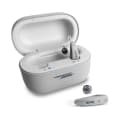
Lexie
Bose-tuned, rechargeable, self-fitting via the Lexie app, with a 45-day trial. $899 — a fraction of the audiologist price for the same mild-to-moderate range.
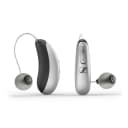
Sennheiser
Built by Sonova (the company behind Phonak), the All-Day Clear is a true QUH self-fit hearing aid with Bluetooth streaming and a 2-year warranty — around $949 street.
Picks are based on FDA regulatory pathway, price, and severity fit from our verified product database — not on which brand pays the most.
Yes. Since the FDA's over-the-counter (OTC) hearing aid rule took effect on October 17, 2022, adults 18 and older who perceive mild-to-moderate hearing loss can buy FDA-regulated hearing aids directly from stores and online retailers without a prescription, medical exam, or audiologist fitting. Prescription hearing aids are still required for children and for hearing loss greater than moderate.
Both are FDA-regulated medical devices, but OTC hearing aids are sold directly to consumers for self-fitting and are limited to perceived mild-to-moderate loss in adults. Prescription hearing aids are fitted and programmed by a licensed hearing professional, can be set for any degree of loss including severe and profound, and are the only option for children under 18. OTC devices typically cost a few hundred to roughly $1,500 a pair; prescription devices typically run $2,000-$6,000 a pair including professional services.
For perceived mild-to-moderate hearing loss, well-reviewed OTC self-fitting devices can perform comparably to entry- and mid-tier prescription aids, because many share components and chips with prescription lines. The gap is in professional fitting: an audiologist measures your specific hearing loss, programs the device to it, and adjusts over time. If your loss is more than moderate, fluctuating, or you want hands-on support, prescription fitting is generally the better fit.
Mild loss (about 26-40 dB HL) means you struggle with soft speech and conversation in noise; moderate loss (41-55 dB HL) means normal conversation is difficult without help. OTC devices are intended for these two bands. A formal audiogram from a hearing test is the only precise measure, but our severity quiz and audiogram interpreter give a free starting estimate. If you cannot follow conversation even one-on-one in a quiet room, your loss may exceed the OTC range.
See a physician or ENT before buying OTC if you have sudden or rapidly worsening hearing loss, hearing loss in only one ear, pain or drainage from the ear, dizziness or vertigo, ringing in only one ear, a history of ear surgery, or if the person needing help is under 18. These can signal a treatable medical condition that a self-fit device would mask rather than address.
Original Medicare (Parts A and B) does not cover hearing aids, OTC or prescription. Some Medicare Advantage plans, private insurance, the VA, and Medicaid programs offer hearing benefits, but most apply to prescription devices obtained through approved providers rather than retail OTC purchases. Check your specific plan; our insurance coverage checker summarizes the major programs.