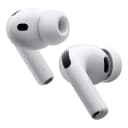
Apple
AirPods Pro 3 with Hearing Aid Feature
FDA-cleared OTC hearing aid software
Flagship tool
Enter your hearing thresholds at each frequency. We compute your Pure Tone Average per ear, classify severity per NIDCD bands, detect asymmetry, check FDA OTC scope, and recommend a device class with matched openFDA-verified products.
This is not medical advice.
This tool provides general guidance based on FDA, NIDCD, and manufacturer-published data. If you have hearing loss, see an audiologist or ENT for a proper evaluation. For sudden hearing loss, see an ENT physician the same day — it's time-sensitive.
Enter your hearing threshold (dB HL) at each frequency, for each ear. You can find these values on the report your audiologist gave you. Lower numbers = better hearing. The Pure Tone Average (PTA) needs at least 500, 1000, and 2000 Hz — other frequencies are optional but improve shape classification.
| Frequency | Right ear (dB HL) | Left ear (dB HL) |
|---|---|---|
| 250 Hz | ||
| 500 Hz | ||
| 1k Hz | ||
| 2k Hz | ||
| 4k Hz | ||
| 8k Hz |
Check anything that applies. These are FDA-mandated red flags that should be evaluated by an ENT physician or audiologist before fitting an OTC hearing aid.
Enter at least one frequency to enable the interpreter.
Pure Tone Average (PTA) is the clinical standard: the average of your hearing thresholds at 500, 1000, and 2000 Hz. We compute it per ear (and use the worse ear for the device recommendation, since you need amplification to match your weakest side).
Severity bands follow NIDCD classifications: normal (≤25 dB), mild (26-40), moderate (41-55), moderately severe (56-70), severe (71-90), profound (91+).
FDA OTC scope per 21 CFR 800.30 is "perceived mild-to-moderate" — we cap at PTA ≤ 55 dB. Above that, you need Costco prescription or audiologist fitting.
Asymmetry detection: any test frequency showing ≥15 dB difference between ears triggers an audiologist referral. Asymmetric loss can indicate retrocochlear pathology (e.g., acoustic neuroma) and warrants medical evaluation.
Red-flag triage follows the FDA's mandated list: sudden onset, drainage, unilateral tinnitus, recent surgery, dizziness, pain, ear deformity, and pediatric (under 18). Any of these routes to ENT or audiologist regardless of audiogram values.
Already own a Costco Kirkland aid? The Translator tells you who actually made it and what to buy today if you upgrade.
Interpret your audiogram above for matches tuned to your exact PTA. If you just want a head start, these three cover most mild-to-moderate buyers.
Apple
At $199-$249 with FDA-cleared hearing aid software (DEN230081), the AirPods Pro 3 turn an iPhone you may already own into a legitimate mild-to-moderate hearing aid. Lowest-risk way to start.
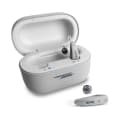
Lexie
Bose-tuned, rechargeable, self-fitting via the Lexie app, with a 45-day trial. $899 — a fraction of the audiologist price for the same mild-to-moderate range.
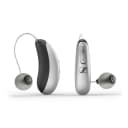
Sennheiser
Built by Sonova (the company behind Phonak), the All-Day Clear is a true QUH self-fit hearing aid with Bluetooth streaming and a 2-year warranty — around $949 street.
Picks are based on FDA regulatory pathway, price, and severity fit from our verified product database — not on which brand pays the most.