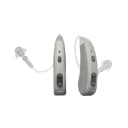
Lexie
Lumen
FDA-cleared OTC self-fit
Search "OTC hearing aids" and you'll get hundreds of products. Only about thirteen of them are actually FDA-cleared as OTC hearing aids. The rest live in five other regulatory pathways — some perfectly legitimate, some worth a hard second look. This is the honest map no other comparison site publishes.
Every product on HearingAidMatch carries its pathway badge so you can see this at a glance. Browse by brand to see how each one is labeled.
"FDA-registered," "FDA-approved," "OTC hearing aid," "medical-grade" — these phrases appear on product pages with very different regulatory realities behind them. The word on the box doesn't tell you what you're buying; the FDA pathway does. A device's pathway tells you whether it was actually reviewed as a hearing aid, what degree of loss it's allowed to serve, and how much weight its claims carry.
Below are the nine pathways we track, grouped from the most clear-cut to the most caution-worthy. The colored badge on each is the same one that appears on every product page across the site.
FDA-cleared OTC self-fit
FDA-cleared OTC self-fit hearing aid (Class 2, 21 CFR 874.3325, product code QUH)
The gold standard. Cleared by the FDA specifically as a self-fitting OTC hearing aid (Class 2, 21 CFR 874.3325, product code QUH). Only about nine devices hold this clearance. If a product carries it and your loss is mild-to-moderate, you are buying exactly what the label says.
Examples: Eargo 5/6, Lexie Lumen, Nuheara IQbuds, Sennheiser All-Day Clear
FDA-cleared OTC preset wireless
FDA-cleared OTC preset wireless hearing aid (Class 2)
An OTC preset category created by the 2022 rule (Class 2). These are 510(k)-exempt, so there is no K-number to look up — the exemption is the clearance. Legitimate OTC hearing aids.
Examples: Lucid Engage Rechargeable, Lucid Tala
FDA-cleared OTC preset
FDA-cleared OTC preset hearing aid (Class 1, 21 CFR 874.3300, product code QUF)
The Class 1 OTC preset category (21 CFR 874.3300, also 510(k)-exempt). Like QUG, the exemption is the pathway. A legitimate OTC hearing aid, typically the simplest preset style.
Examples: Lucid Enrich Pro
FDA-cleared OTC hearing aid software
FDA-cleared OTC hearing aid software (Class 2, 21 CFR 874.3335, product code SCR)
Software that turns cleared hardware into a hearing aid (Class 2, 21 CFR 874.3335). This is how AirPods Pro deliver an FDA-authorized hearing aid feature. Genuinely OTC-authorized — just be aware the 'device' is partly the app.
Examples: Apple AirPods Pro Hearing Aid feature (DEN230081), Nuance Audio (K243150)
Prescription self-fit, sold as OTC
Prescription self-fit (product code QDD) sold as OTC under 21 CFR 800.30 self-certification. The underlying 510(k) is Rx-cleared.
Here the labeling gets subtle. The underlying 510(k) is a prescription (Rx) self-fitting clearance, but the product is sold over the counter under a self-certification provision (21 CFR 800.30). Legal and generally well-made — just understand it is technically a prescription device marketed as OTC.
Examples: Jabra Enhance Select line, Sony CRE-C10/E10 (discontinued April 2026)
Variant of parent K-number
Variant of a parent K-number via letter-to-file modification. Not separately listed in openFDA. Display parent clearance for verification.
A newer model covered under an older model's clearance via a 'letter-to-file' modification, so it has no separate openFDA listing of its own. Usually fine — but you should be able to see the parent K-number disclosed. If a brand can't point to one, treat the claim with caution.
Examples: Lexie B1/B2 Plus (parent K223137), Eargo 7/8/SE (parent K221698)
FDA-registered only — pathway unverified
Brand claims 'FDA-registered Class I' but has no specific 510(k) under their name. Establishment registration only — verify pathway with manufacturer before purchase.
An orange flag. The brand says 'FDA-registered Class I,' but we find no specific 510(k) under their name in openFDA. 'Registered' means the company told the FDA it exists — it is not the same as a cleared or approved hearing aid. It may be a legitimate Class I device or an overstated marketing claim; verify the exact pathway with the manufacturer before buying.
Examples: MDHearing Air/Neo/Volt, Audicus full line
Traditional prescription hearing aid
Traditional prescription air-conduction hearing aid (Class 1, 21 CFR 874.3300, 510(k)-exempt). Dispensed via audiologist or Costco hearing aid center.
Traditional prescription air-conduction hearing aids (Class 1, 510(k)-exempt). Not OTC, not self-fit — fitted by a professional, and the right tool for greater-than-moderate loss. We include them for comparison, never in OTC 'best' lists.
Examples: Costco prescription line, most audiologist-dispensed aids
Personal Sound Amplifier — NOT a hearing aid
Personal Sound Amplifier (PSAP) — NOT an FDA-cleared hearing aid. PSAPs are regulated as consumer audio products, not medical devices.
The red line. A Personal Sound Amplification Product is a consumer-electronics sound amplifier — not an FDA-cleared hearing aid — even when it is advertised as an 'OTC hearing aid.' It has no hearing-aid clearance to verify. PSAPs are excluded from our matcher and 'best' lists entirely. See our dedicated PSAP guide.
Examples: Otofonix line, Audien EV1/EV3
You don't have to take any seller's word — including ours. To verify a device's pathway:
Still deciding between buying off the shelf and seeing a professional? Start with OTC vs prescription hearing aids, and if a product turns out to be a sound amplifier rather than a hearing aid, read PSAP vs hearing aid.
Three products holding the QUH OTC self-fit clearance itself — the strictest pathway on this page — in ascending price order.
Lexie
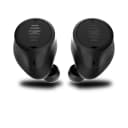
Nuheara
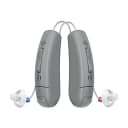
Soundwave
Picks are based on FDA regulatory pathway, price, and severity fit from our verified product database — not on which brand pays the most.
Only about 13. Roughly nine devices hold the gold-standard QUH 'OTC self-fitting hearing aid' 510(k) clearance, plus a handful in the 510(k)-exempt QUG and QUF preset categories and the SCR software category (such as the Apple AirPods Pro hearing aid feature). Every other product marketed as an 'OTC hearing aid' falls into a different regulatory pathway — prescription-cleared-but-sold-as-OTC, a ride-on variant, an ambiguous 'FDA-registered' Class I product, or a PSAP that isn't a hearing aid at all.
Far less than it sounds. FDA establishment registration simply means a company has told the FDA that it makes or distributes a device — it is a list, not a review. It is not the same as FDA clearance (510(k)) or FDA approval. A product can be truthfully 'FDA-registered' while having no hearing-aid clearance at all. Look for a specific 510(k) K-number, a De Novo (DEN) number, or a named 510(k)-exempt OTC category — not just the word 'registered.'
Yes. Under 21 CFR 800.30, a manufacturer can self-certify that a prescription-cleared self-fitting device meets the OTC requirements and sell it over the counter. Jabra Enhance Select is a well-known example. These are legitimate, regulated products — the nuance is that the underlying 510(k) is a prescription clearance, which we label honestly rather than calling it a native OTC device.
A model that is legally covered by an earlier model's FDA clearance through a 'letter-to-file' modification, rather than its own new submission. It therefore has no separate openFDA record. This is a normal, legal practice — but a trustworthy seller should be able to disclose the parent K-number the variant rides on. Lexie's B-series rides on the Lexie Lumen clearance (K223137); Eargo 7/8/SE ride on the Eargo 5/6 clearance (K221698).
Search the FDA's 510(k) database for the brand or manufacturer name, or look the device up in openFDA. A genuine OTC hearing aid will return a 510(k) K-number (or a DEN De Novo number) with a product code of QUH, QDD, or SCR — or it will fall in the 510(k)-exempt QUG/QUF OTC categories. If the only thing you can find is an establishment registration with no device clearance, that is a meaningful warning sign.
Pathway classifications verified against openFDA. Where a brand's pathway is ambiguous, we label it as unverified rather than guess.