Apple
AirPods Pro 3 with Hearing Aid Feature
FDA-cleared OTC hearing aid software
The honest answer: hearing aids don't cure tinnitus, but for the many people whose ringing comes with hearing loss, they often make it noticeably less bothersome — and clinical guidelines recommend a hearing-aid evaluation in that case. Here's how that works, when OTC devices fit, and the warning signs that mean you should see a doctor first.
Tinnitus — ringing, buzzing, or hissing with no external source — very often travels with hearing loss. When it does, hearing aids frequently help: not by silencing the tinnitus, but by amplifying the outside sounds you've been missing, so the internal sound stands out less and your brain spends less effort straining to hear. The American Academy of Otolaryngology's clinical practice guideline recommends a hearing-aid evaluation for people with persistent, bothersome tinnitus and documented hearing loss.
What hearing aids don'tdo is cure tinnitus — there's no cure for most chronic cases — and they're much less likely to help if you have tinnitus with no measurable hearing loss. The first useful step is almost always a hearing test.
Three things are at work. First, masking: by bringing back the everyday sounds your hearing loss had turned down, hearing aids fill the quiet that lets tinnitus dominate. Second, reduced strain: when you can hear conversation more easily, the stress and over-focus that amplify tinnitus distress tend to ease. Third, many modern hearing aids include optional sound-therapy or masking programs — gentle background tones — though that's a helpful add-on rather than the main reason they work.
If a hearing test shows your loss is in the perceived mild-to-moderaterange, an over-the-counter hearing aid can deliver the same amplification benefit for tinnitus as a more expensive device — at a fraction of the cost. Check whether you're in range with the severity quiz or, if you have a test, the audiogram interpreter; if you are, our standing OTC picks below are open-fit devices well suited to the age- and noise-related loss that most often accompanies tinnitus. If your hearing tests normal, hearing aids aren't the right tool, and sound therapy or counseling-based approaches are worth discussing with a professional.
Most tinnitus is benign, but some patterns need medical evaluation before you consider any device. See a physician or ENT promptly if your tinnitus is pulsatile (a rhythmic whooshing in time with your heartbeat), is in only one ear, came on suddenly, or comes with sudden hearing loss, dizziness, or ear pain or drainage. These can point to a treatable underlying condition. Gradual ringing in both ears alongside age- or noise-related hearing loss is the common, lower-risk situation where hearing aids are typically considered.
Open-fit OTC hearing aids for perceived mild-to-moderate loss — the amplification that most often eases tinnitus. Ascending price order; severity fit verified against each product's cleared range.
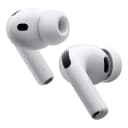
Apple
At $199-$249 with FDA-cleared hearing aid software (DEN230081), the AirPods Pro 3 turn an iPhone you may already own into a legitimate mild-to-moderate hearing aid. Lowest-risk way to start.
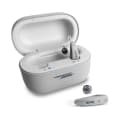
Lexie
Bose-tuned, rechargeable, self-fitting via the Lexie app, with a 45-day trial. $899 — a fraction of the audiologist price for the same mild-to-moderate range.
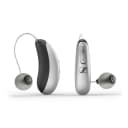
Sennheiser
Built by Sonova (the company behind Phonak), the All-Day Clear is a true QUH self-fit hearing aid with Bluetooth streaming and a 2-year warranty — around $949 street.
Picks are based on FDA regulatory pathway, price, and severity fit from our verified product database — not on which brand pays the most.
For people whose tinnitus occurs alongside hearing loss — which is the most common situation — hearing aids often help. They don't cure or silence tinnitus, but by amplifying the external sounds you've been missing, they make the internal ringing less prominent by comparison, and they reduce the listening strain that can make tinnitus feel worse. Clinical guidelines from the American Academy of Otolaryngology recommend a hearing-aid evaluation for people with persistent, bothersome tinnitus and documented hearing loss. If you have tinnitus without any hearing loss, hearing aids are less likely to help.
If your tinnitus comes with perceived mild-to-moderate hearing loss, an over-the-counter hearing aid can provide the same benefit as a prescription one for this purpose — amplifying outside sound so the ringing stands out less. Confirm your loss is in the OTC range first with our severity quiz or audiogram interpreter. Some hearing aids also include built-in sound-therapy or masking features; these are a bonus rather than the main mechanism. OTC devices won't help tinnitus that occurs without hearing loss.
No — there is currently no cure for most chronic tinnitus, and hearing aids don't eliminate it. What they can do, when hearing loss is present, is make tinnitus less noticeable and less bothersome day to day by restoring the external sounds that normally mask it. Many people find that meaningful relief on its own. Tinnitus management often combines amplification with sound therapy and, for distress, counseling approaches like CBT.
See a physician or ENT promptly — before buying any device — if your tinnitus is pulsatile (a rhythmic whooshing in time with your heartbeat), is in only one ear, came on suddenly, or comes with sudden hearing loss, dizziness, or ear pain or drainage. These patterns can signal a treatable medical condition that needs evaluation rather than a self-fit device. Tinnitus in both ears that has come on gradually alongside age- or noise-related hearing loss is the common, lower-risk situation where hearing aids are typically considered.
Not always, but the two very often go together — tinnitus frequently accompanies age-related or noise-induced hearing loss, and people are sometimes unaware of the underlying loss until it's measured. That's why a hearing test is a sensible first step when tinnitus is persistent: if it reveals hearing loss, treating that loss with hearing aids is often the most effective way to ease the tinnitus too. Our audiogram interpreter and severity quiz can give you a free starting estimate.