Apple
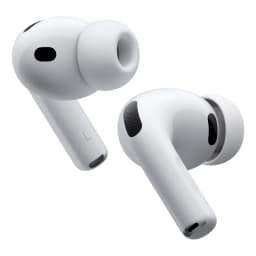
AirPods Pro 3 with Hearing Aid Feature
- Severity range
- 26–60 dB HL
- Form factor
- earbud-style
- Battery
- Rechargeable (10 hr)
- Bluetooth
- Apple H2 chip (3rd gen), improved transparency mode
- Trial
- 14 days
- Warranty
- 12 months
Alternatives
Eargo makes genuinely unique hardware — completely-in-canal OTC hearing aids that are nearly invisible in normal conversation. The reason shoppers hunt for alternatives is almost always the price: $799 for the entry Eargo SE, and $2,650-$2,950 for the current flagships, in a category where strong self-fitting aids start under $300.
Here's the honest trade-off up front: no other OTC brand currently offers a true completely-in-canal design, so nothing on this page is quite as invisible as an Eargo. What the alternatives offer instead is most of the discretion — slim receiver-in-canal designs and everyday earbuds nobody looks twice at — at a half to a tenth of the price, with equal or stronger FDA clearances.
Every pick carries an honest FDA-pathway label and covers the same perceived mild-to-moderate range. Prices from our verified data layer.

Apple
Nobody reads earbuds as a hearing aid. FDA-cleared hearing aid software (DEN230081) in hardware people wear everywhere anyway, at $199-$249 — a tenth of flagship Eargo pricing.

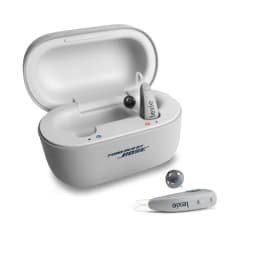
Lexie
Also stocked at Costco at $999. Rechargeable RIC. Subscription tier discontinued.
Bose-tuned, rechargeable, app self-fit with a 45-day trial at $899 — flagship-level features below Eargo's entry price point.

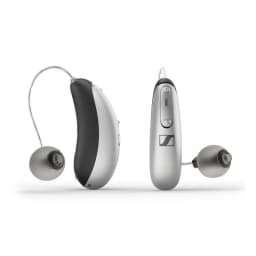
Sennheiser
Filed under Sonova AG (parent of Phonak) — manufacturer is Sonova, brand is Sennheiser-licensed
A true FDA OTC self-fit (QUH) hearing aid built by Sonova, with Bluetooth streaming and a 2-year warranty at around $949 — premium engineering without the four-figure-per-ear price.
Picks are based on FDA regulatory pathway, price, and severity fit from our verified product database — not on which brand pays the most.
Not truly. Eargo is currently the only OTC brand with a completely-in-canal design, so if invisibility inside the ear canal is non-negotiable, the budget move is Eargo's own SE at $799 rather than a different brand. The closest practical substitutes are earbud-style devices like AirPods Pro with the Hearing Aid feature — highly discreet socially, because earbuds don't read as hearing aids at all.
You're paying for miniaturization — packing a rechargeable OTC hearing aid entirely into the ear canal — plus lifetime remote support from hearing professionals on current models. The hearing-loss range covered (perceived mild-to-moderate) is the same as $300-$900 alternatives; the premium buys the form factor, not more hearing correction.
The strong ones do, or better. Sennheiser's All-Day Clear and Lexie's Lumen hold direct FDA OTC self-fit clearances (QUH); Apple's Hearing Aid feature holds its own De Novo software clearance (SCR); Lexie's Bose-series and most current Eargo models are authorized ride-on variants. Every product card on this site labels the exact pathway, because the marketing terms all sound alike.